Trading Platform Case Studies
What was engineered for brokerages, signal providers, prop desks, and FinTech teams—client portals, multi-broker ops, and automation.
Representative outcomes from commissioned builds. Metrics are anonymized and consistent with hub summaries — replace with client-approved figures when available.
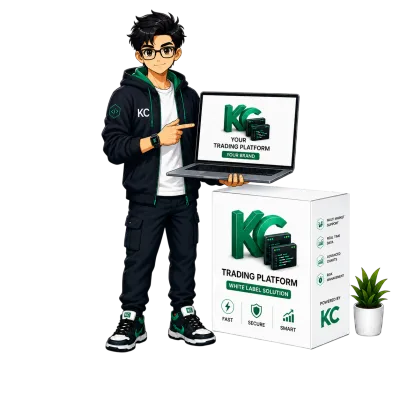
Platform capabilities
- Multi-broker integration
- TradingView automation
- Client management
- Cloud infrastructure
Challenge → Solution → Results
Regional Broker Client Portal
Problem
The Challenge
What problem did the brokerage face?
- A regional brokerage serving retail clients across multiple cities relied on manual trade copying, spreadsheet P&L tracking, and fragmented broker terminal access. Clients expected a branded web portal with live positions and order placement — not separate logins per broker application.
- Internal IT estimated 18+ months to build OMS, broker OAuth, WebSocket market data, and admin tooling from scratch. Competitors were already marketing modern client experiences while the firm remained constrained by operational overhead.
- Peak IST session load and multi-broker symbol resolution across NSE and BSE added complexity beyond a generic web development team's experience. Leadership needed a proposal-based path to branded deployment without hiring a full trading infrastructure division.
Deployment
The Solution
What was engineered for the brokerage?
- The engagement delivered a branded Client Portal, multi-broker OAuth linking, and an Admin Dashboard for client lifecycle management. Broker API adapters covered their primary NSE/BSE relationships with paper-trading defaults during onboarding.
- OMS fill reconciliation and tick-driven RMS replaced manual oversight for standard retail workflows. Custom reporting exported client statements under the brokerage brand for monthly statements and dispute resolution.
- Infrastructure launched on a dedicated Mumbai server the firm owned, with a documented migration path to load-balanced AWS ap-south-1. Split-worker architecture allowed evening deploys without interrupting live session trading.
Platform modules
Modules used in this deployment
- Client Portal
- Multi-Broker Dashboard
- Broker API Integration
- OMS
- RMS
- Admin Dashboard
- Reports
- Infrastructure & Deployment
Outcomes
Results after deployment
Key growth metric
- Reduced manual order entry by an estimated 70%
- Average execution time cut from minutes to seconds via automated routing
- Infrastructure scaled from single dedicated server to load-balanced cloud deployment
Challenge → Solution → Results
Signal Provider Automation
Problem
The Challenge
What problem did the signal provider face?
- A TradingView-based signal provider grew subscriber count through social channels but executed alerts via fragile single-process scripts. Per-subscriber broker differences — Zerodha, Angel One, and others — caused frequent routing errors during peak alert windows.
- Subscribers demanded branded portals with live P&L and trade history instead of screenshot proofs in messaging apps. Support tickets spiked around P&L disputes and stale credential incidents when paper-trading safeguards were absent.
- Hiring dedicated operations staff for every 50 new subscribers eroded margins. Leadership needed subscription-gated automation that scaled without linear headcount growth.
Deployment
The Solution
What TradingView automation and portals were built?
- TradingView Automation routed webhook alerts through per-client strategy allowlists with broker-specific OAuth credentials. Paper-trading defaults blocked live orders until subscribers completed explicit activation — eliminating stale-credential incidents.
- A branded Client Management Portal showed live positions, subscription tier status, and exportable trade history. Admin Dashboards let operators pause subscribers, adjust strategy maps, and monitor webhook queue depth during peak windows.
- Custom reporting templates aligned portal P&L with broker statements, reducing dispute-driven support load. Subscription billing integration gated feature access by tier without manual spreadsheet tracking.
Platform modules
Modules used in this deployment
- TradingView Automation
- Client Management Portal
- Broker API Integration
- Client Management
- OMS
- Reports
Outcomes
Results after deployment
Key growth metric
- TradingView webhook fan-out handles peak alert windows reliably
- Paper-trading safety defaults eliminated stale-credential live order incidents
- Custom reporting reduced support tickets related to P&L disputes
Challenge → Solution → Results
Prop Desk Operations
Problem
The Challenge
What problem did the prop desk face?
- A prop trading desk managed dozens of trader accounts across multiple brokers with manager-scoped access requirements. Legacy tools offered per-broker terminals without unified risk visibility or session-end bulk operations.
- Deploying strategy or API changes during market hours risked killing active sessions — unacceptable for a desk trading through IST peak windows. Data residency requirements ruled out multi-tenant overseas SaaS.
- Scaling from 40 to 100+ trader seats required tick-driven risk monitoring and audit trails managers could review without logging into each broker separately.
Deployment
The Solution
What dealer terminal and risk controls were engineered?
- A dedicated-server deployment on infrastructure they owned met data residency requirements while providing a Custom Dealer Terminal / Admin Dashboard across all trader accounts. Manager roles scoped visibility to assigned trader cohorts with full order audit trails.
- Tick-driven RMS enforced per-account stop-loss, exposure caps, and session rules. Bulk square-off at market close reduced end-of-day operations to a single controlled action instead of per-terminal manual exits.
- Split-worker architecture separated API services from trading workers — enabling deploys during maintenance windows without interrupting live fills. Multi-broker adapters normalized symbol resolution across provider differences.
Platform modules
Modules used in this deployment
- Custom Dealer Terminal
- Admin Dashboard
- RMS
- OMS
- Multi-Broker Dashboard
- Infrastructure & Deployment
- Security & Compliance
Outcomes
Results after deployment
Key growth metric
- Bulk square-off at session close reduced manual intervention to one operation
- Split-worker architecture eliminated trading interruptions during API deploys
- Dedicated-server deployment met firm data residency requirements
Challenge → Solution → Results
FinTech Branded Client Portal
Problem
The Challenge
What problem did the FinTech team face?
- An early-stage FinTech team had investor pressure to ship a branded trading experience within a quarter. Building OMS, broker OAuth, client portals, and admin tooling from scratch threatened both timeline and runway.
- The product vision required clients interacting with the FinTech brand — not a vendor portal — while still supporting multi-broker connectivity for early adopter segments. White-label branding was a delivery style, not a SaaS subscription.
- The founding team needed proposal-based scoping, paper-trading defaults for safe onboarding, and a clear expansion path into automation without hiring a full trading infrastructure division first.
Deployment
The Solution
What branded client experience was engineered?
- The engagement delivered a branded Client Portal, domain identity, and Admin Dashboard workflows tailored to their onboarding funnel—developed for the client and deployed under their ownership. Paper-trading defaults protected early users until live activation criteria were met.
- Primary Broker API adapters covered the first target audience, with a documented path to expand multi-broker support as product-market fit clarified. Subscription-ready access patterns supported early monetization experiments without spreadsheet tracking.
- Infrastructure began on a modest cloud footprint sized for pilot concurrency, with sizing guidance for later scale. Product focus stayed on brand, acquisition, and workflow polish rather than rebuilding commodity trading infrastructure from scratch.
Platform modules
Modules used in this deployment
- Client Portal
- White-label Trading Solution (Developed for Client)
- Broker API Integration
- Paper Trading
- Client Management
- Admin Dashboard
- Infrastructure & Deployment
Outcomes
Results after deployment
- Branded client experience live in months instead of a greenfield rebuild estimate
- Paper-trading defaults reduced early onboarding risk during pilot cohorts
- First broker adapters unblocked real account-linked workflows for early adopters
- Clear expansion path documented for automation and additional brokers post-launch
Challenge → Solution → Results
Brokerage Software Operations
Problem
The Challenge
What problem did brokerage operations face?
- A growing brokerage ran client operations across chat threads, spreadsheets, and disconnected broker portals. As the book expanded, onboarding delays and missing client context became a daily ops tax.
- Leadership wanted brokerage software that centralized clients, subscriptions, and operational visibility under their brand — without waiting for a multi-year custom rebuild of every module.
- Teams needed multi-client management, clearer reporting, and room to add TradingView automation later without replacing the core system again.
Deployment
The Solution
What client-management and ops software was built?
- The engagement delivered branded brokerage operations software with centralized client organization, Admin Dashboard workflows, and reporting views shared across operations staff. Client preference and group structures reduced one-by-one configuration overhead.
- Multi-broker connectivity supported clients who used different broker relationships while presenting one coherent brokerage experience. Operational history became easier to review during disputes and month-end processes.
- TradingView Automation was introduced selectively after core ops stabilized — starting with high-volume workflows rather than automating everything on day one. Infrastructure sizing followed actual concurrency growth instead of speculative overbuild.
Platform modules
Modules used in this deployment
- Brokerage Software
- Client Management Portal
- Multi Client Management
- Group Client Management
- Multi-Broker Dashboard
- Reports
- TradingView Automation
Outcomes
Results after deployment
- Client onboarding and preference setup moved from scattered sheets into shared operational workflows
- Operations gained unified visibility across a larger multi-client book
- Multi-broker client support reduced portal-hopping for staff and clients
- Selective automation expansion planned after operational baseline stabilized
Where should you go next after reviewing these outcomes?
Related Capabilities
6 modules to explore alongside your platform build.
- 01Capabilities
Custom Trading Software Development
Explore this capability and how it can be engineered for your business.
Custom Trading Software Development - 02Development
Custom Trading Software Development
Tailored workflows, features, and integrations for your business model.
Custom Trading Software Development - 03Integrations
Multi-Broker Trading Platform
Unified multi-broker connectivity and routing for your operations.
Multi-Broker Trading Platform - 04Automation
TradingView Automation
Turn TradingView alerts into automated execution across linked accounts.
TradingView Automation - 05Development
Brokerage Software
Brokerage operations software tailored to your model.
Brokerage Software - 06Delivery
White-Label Delivery Option
Branded, client-owned trading systems delivered as a custom engagement.
White-Label Delivery Option

Let's Build Your Trading Technology
From concept to deployment, I develop custom trading software that matches your business workflow, infrastructure, and branding—deployed on your own servers under your own ownership. Pricing is proposal-based because every engagement is scoped to your requirements.
Services
- Custom Trading Platforms
- Multi-Broker Integration
- TradingView Automation
- Risk Management Systems
- OMS & RMS Development
- Client Management Portals
Ready to discuss your requirements?
Book a technical consultation to talk through your workflows, integrations, and what you need built—deployed on your infrastructure under your ownership.
Let's discuss your requirements and build trading technology tailored to your business.